Do You Need a Permit for a Skip? UK Rules Explained
By DirectToSkip · 7 June 2026

You only need a permit if your skip will be placed on a public road or pavement. If the skip can sit entirely on your driveway, your garden, or any other private land, no permit is needed.
This guide explains exactly when a permit is required, how much they cost, who arranges them, and what the rules are around safety lighting and reflective markings.
The simple test: where is the skip going?
Run through these two questions:
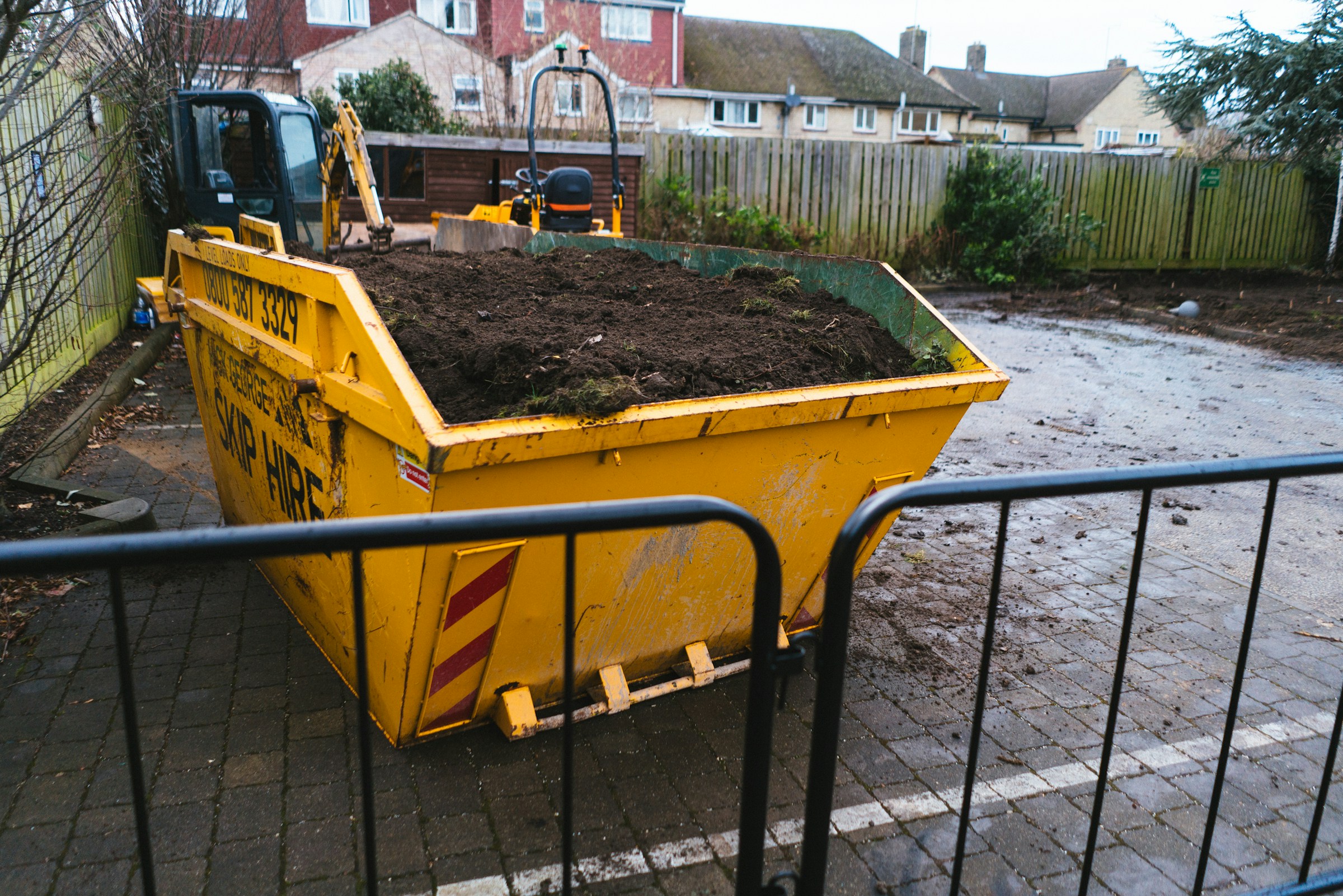
- Is the skip entirely on private land? (Your driveway, your front garden, a private car park.) If yes — no permit needed.
- Will any part of the skip touch the road, pavement, grass verge, or any other public highway? If yes — you need a permit.
"On the road" is exactly what it sounds like — but it also includes the pavement, the verge between road and pavement, and shared driveways or alleyways that aren't entirely your property. If you're unsure, ask the council or your skip company.
What is a skip permit (and what does it cover)?
A skip permit is a temporary licence from your local council that allows a private waste container to occupy a section of public highway. It includes:
- The right to place the skip at a specified location for the duration of the permit.
- Safety conditions the skip must meet — usually reflective markings, traffic cones, and night-time lights.
- A maximum hire duration, typically 7–14 days; some councils issue 28-day permits.
If you exceed the time limit or move the skip without telling the council, you can be fined and the council can remove the skip at your expense.
Who applies for the permit?
In almost every case, the skip hire company will apply on your behalf and add the cost to your invoice. This is universally easier — they know the council's process, they can guarantee the skip meets the conditions, and the permit will already be in place before delivery.
You can apply yourself in theory, but you'll need to provide proof that the container itself meets the council's spec, which most homeowners can't do for a hired skip. Always ask your supplier to arrange it.
How much does a skip permit cost in the UK?
Permit fees vary wildly between councils. As a rough guide for 2026:
- London boroughs: £40–£100, with some boroughs also charging a refundable deposit of £50+ that's released once the skip is removed without incident.
- Major cities (Manchester, Birmingham, Leeds, Glasgow, Edinburgh): £25–£50.
- Smaller towns and rural councils: £20–£40.
This is on top of the skip hire itself. Our 2026 skip hire price guide covers all-in costs in more detail.
How long does it take to get a permit?
Most councils issue permits within 2–5 working days. Some larger councils take up to 10 days, especially during busy periods (spring/summer).
If you need a skip urgently and a permit is required, this can be a problem — book at least a week in advance to avoid delays. Some skip companies have "fast-track" arrangements with their local councils and can sometimes get permits within 24 hours for an extra fee.
If you can put the skip on your driveway, you can usually get a same-day or next-day delivery.
Safety requirements for road-placed skips
If your skip is on a public road, it has to meet specific safety conditions under the Highway Code and the Highways Act 1980. These include:
- Reflective markings on each end (visible from both directions).
- Traffic cones or hazard lights at each corner.
- Lights from dusk till dawn — usually battery-powered amber flashing lamps.
- Clearly visible permit details — the skip company's name, phone number, and the permit number painted or displayed on the skip itself.
The skip hire company is responsible for providing all of this. If you spot any of these missing on your delivery, call them immediately — both they and you (as the permit holder) can be liable if there's an accident.
City-specific notes
London
London is the trickiest part of the UK for skip permits. Each of the 32 boroughs has its own rules, fees, and turnaround times. TfL (Transport for London) also gets involved for skips on Red Routes and other major roads, which has separate rules and often higher fees.
Skip placement near junctions, bus stops, and parking bays is heavily restricted. Many central London streets simply won't allow a skip on the road at all — you'll need to find a hardstanding location or use an alternative like a skip bag.
If you're in London, see our London skip hire suppliers — they know each borough's quirks and can advise.
Major cities
Manchester, Birmingham, Leeds, Glasgow, and Edinburgh all have straightforward online application processes. Skip companies typically have established relationships with the council and turnaround is reliable.
Conservation areas and listed-building zones
Some councils refuse skip permits in conservation areas or near listed buildings without additional approvals. If you're in a designated zone, ask your supplier or check your council's website before booking.
What if I forget to get a permit?
Placing a skip on the road without a permit is a criminal offence under the Highways Act. Fines vary by council but typically start at £150–£300, and the council can also order the immediate removal of the skip at your expense — which often costs more than the skip hire itself.
If you're in any doubt, just ask your skip company to apply. Pay the £30–£80 permit fee and avoid the much more expensive headache.
Bottom line
Permit rules are simpler than they look: driveway or private land = no permit, public road or pavement = permit required. Your skip company will almost always arrange it for you and bake the cost into your quote. Just remember to ask up front, allow 2–5 working days for the council, and check the skip arrives with the proper lights and reflective markings.
Ready to compare local skip companies who handle permits for you? Browse skip hire by UK city and contact any of our 720+ verified suppliers directly.