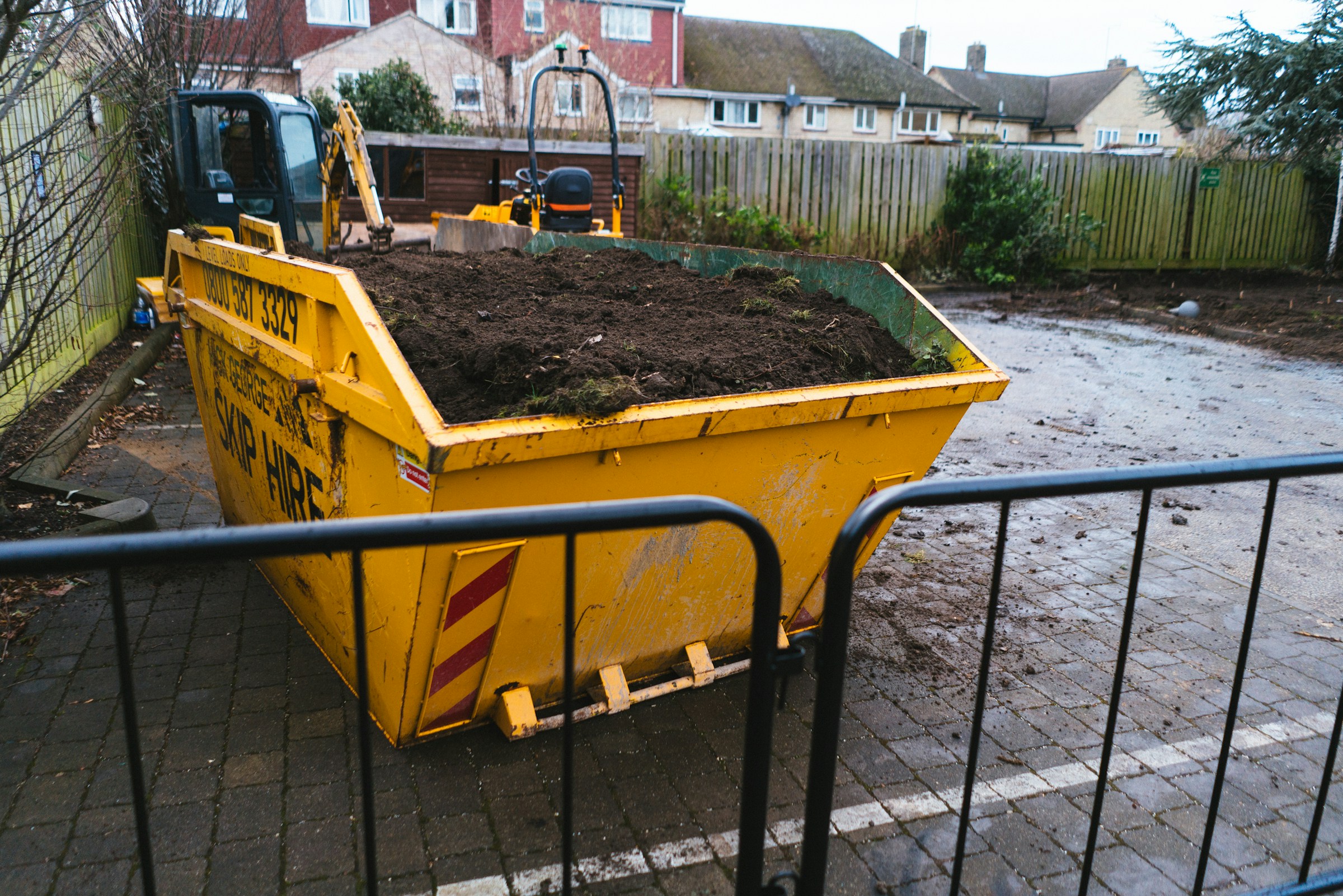
What Size Skip Do I Need? A Complete UK Guide
By DirectToSkip · 7 June 2026

The right skip size depends on your waste volume, weight, and where you can put the skip. For most UK domestic jobs, a 6-yard or 8-yard builder's skip is the sweet spot. Smaller and you risk paying for a second skip; larger and you're paying for capacity you won't fill.
This guide walks through every common UK skip size, what each one realistically holds, and which job size each is right for.
Quick size guide: what fits in each skip
A rough rule of thumb: 1 cubic yard ≈ 10 standard black bin bags of mixed waste. Use this to convert your visual estimate into a yardage.
- 2-yard mini: ~20 bin bags / one small bathroom strip-out / a garden tidy.
- 4-yard midi: ~40 bin bags / a single-room renovation / driveway repair.
- 6-yard builder's: ~60 bin bags / a kitchen or bathroom refit / heavy garden landscaping.
- 8-yard builder's: ~80 bin bags / multi-room renovation / patio + driveway dig-up.
- 10–12-yard: ~100–120 bin bags / loft clearance / mid-size renovation.
- 14–16-yard: ~140–160 bin bags / full house clearance / office strip-out.
- 20–40-yard RoRo: commercial volumes / demolition / large landscaping.
Mini skip (2–4 yard)
Mini skips are the smallest you can hire. They're physically small — roughly the size of a couple of wheelie bins stuck together — which makes them ideal for tight driveways or small front gardens.
Best for: bathroom strip-outs, garden clearances, a single small room of waste, tile and rubble jobs (where weight matters more than volume).
Not ideal for: mixed waste with a few bulky items. Sofas, mattresses, and large carpet rolls eat capacity fast and might not even fit physically.
Typical UK cost: £80–£200 depending on the size and your area. See our full 2026 skip hire price guide for detail.
Midi skip (4–5 yard)
A midi skip is the most common choice for a single-room renovation. It holds about 40 black bin bags of waste and fits comfortably on a standard driveway.
Best for: small kitchen refits, bathroom renovations, garden clearance with some hard waste, a single garage clear-out.
Watch out for: mixing heavy and light waste. If you're mostly throwing soil or rubble, the weight limit (usually 1.5–2 tonnes) will be reached before the skip is visually full.
Builder's skip (6–8 yard)
The default skip size for UK home improvement. Most renovations end up needing a 6 or 8-yard skip somewhere along the way.
6-yard: roughly 60 black bin bags, suits a single kitchen or bathroom refit with all fittings, plus packaging and offcuts.
8-yard: roughly 80 black bin bags, comfortably handles a multi-room renovation, a small extension's worth of debris, or a substantial patio + driveway dig-up.
Both fit on most domestic driveways but check the access route — a typical builder's skip is about 6 metres long once the lorry arms are deployed.
Large skip (10–14 yard)
Large skips are designed for high-volume but lightweight waste. Crucially, most suppliers won't accept rubble, soil, or concrete in a 10+ yard skip — the lorry won't be able to lift it.
Best for: full-house clearances (think probate clearance), office strip-outs, large garden landscaping projects, loft conversions where most of the waste is insulation and timber.
Not for: heavy waste. Use an 8-yard skip filled with rubble instead — same total weight, half the price.
Roll-on Roll-off (RoRo) containers (20–40 yard)
RoRo (or "roll-on roll-off") containers are the giants of the skip world. Instead of being lifted onto a lorry, they're rolled on and off — which means you need plenty of access space for a large vehicle.
Best for: demolition projects, commercial waste, large-scale landscaping, factory clear-outs, multi-property refurbishments.
Cost: typically £400–£800+ depending on size and area. Almost always require a yard or large driveway — they don't fit on a typical road space, and most councils won't issue a permit for one.
Skip bags as an alternative
Skip bags (often branded as "Hippobags" or "skip-in-a-bag") are a useful alternative for very small jobs. They hold roughly 1–1.5 yards of waste, cost £80–£150 including collection, and don't need a permit because they sit on private land.
They're slower (you fill them over weeks, then book a collection) and not suitable for heavy waste, but they're often the cheapest option for a single small DIY job.
Weight limits and the "fill line"
Two rules catch people out:
The fill line
Every skip has a maximum fill level marked on the inside — usually level with the top rim. The skip lorry physically cannot transport an overloaded skip on the road; it's a road traffic offence. If you've overloaded, the supplier will refuse to collect it until you remove the excess.
The weight limit
Skip sizes are quoted in volume (cubic yards) but each one also has a weight limit, typically 1–3 tonnes for builder's skips. If you're filling it mostly with rubble, soil, or concrete, you'll hit the weight limit long before the skip looks full. A 6-yard skip full of rubble might weigh 4 tonnes — too heavy for the lorry. Tell your supplier upfront what kind of waste you're throwing and they'll recommend the right size.
Permit considerations by size
Skip size affects whether you can place it on the road:
- Mini and midi: usually permit-friendly on most residential roads.
- 6–8 yard: common road placements, but some councils restrict in busy streets.
- 10+ yard: increasingly restricted; some councils refuse permits entirely.
- RoRo containers: almost never permitted on public roads — private land only.
Read more in our guide to UK skip permits.
How to estimate your waste
If you're not sure how big your job is, the easiest method is to count black bin bags:
- Walk through the rooms or area you'll be clearing.
- Estimate how many filled bin bags it would generate, including bulky items (count a sofa as 3 bags, a fridge as 4, a mattress as 5).
- Divide by 10 — that's your rough cubic yardage.
- Round up to the next standard skip size.
A rule of thumb: if you're between two sizes, go bigger. The marginal cost of one size up (about £30–£50) is far less than the cost of a second skip if you underestimate.
Bottom line: choose by job, not by gut
Pick your skip by matching the realistic waste estimate above, not by what feels right. For a single-room refit, a 4-yard midi is almost always enough. For most multi-room renovations or full clearances, an 8-yard builder's skip is the safe default. If you're in doubt, ask the supplier — most will recommend the right size based on what you describe.
Ready to book? Browse skip hire by UK city and contact a local supplier directly — no booking fees, no middlemen.